Ambavi Creators
combines the traditional art of storytelling with modern technologies to create immersive narratives.
What is immersive storytelling and why have we chosen it as the core format of our work? For us, as storytellers, form is always of paramount importance. It is precisely the search for new forms that allows us to retell the same stories endlessly, while still ensuring they retain their relevance.
To borrow from Borges, there are only four stories that humanity retells indefinitely - though this is not a universally shared opinion. Everyone counts in their own way. There are those who believe that 120 plots exist, while others argue that the number of stories to be told is exactly 39. Meanwhile, Joseph Campbell wrote The Hero with a Thousand Faces, where he attempted to outline the common traits, themes and narrative structures found across diverse, often unconnected cultures when describing the hero’s journey.
And if all this is indeed true - if the number of stories is finite, every single one of them has already been told and heroes tread the exact same path over and over again - why haven't we grown tired of retelling these stories endlessly, from the Epic of Gilgamesh to the present day? What is this stubbornness, this passion, that compels us to retell the same things without end?
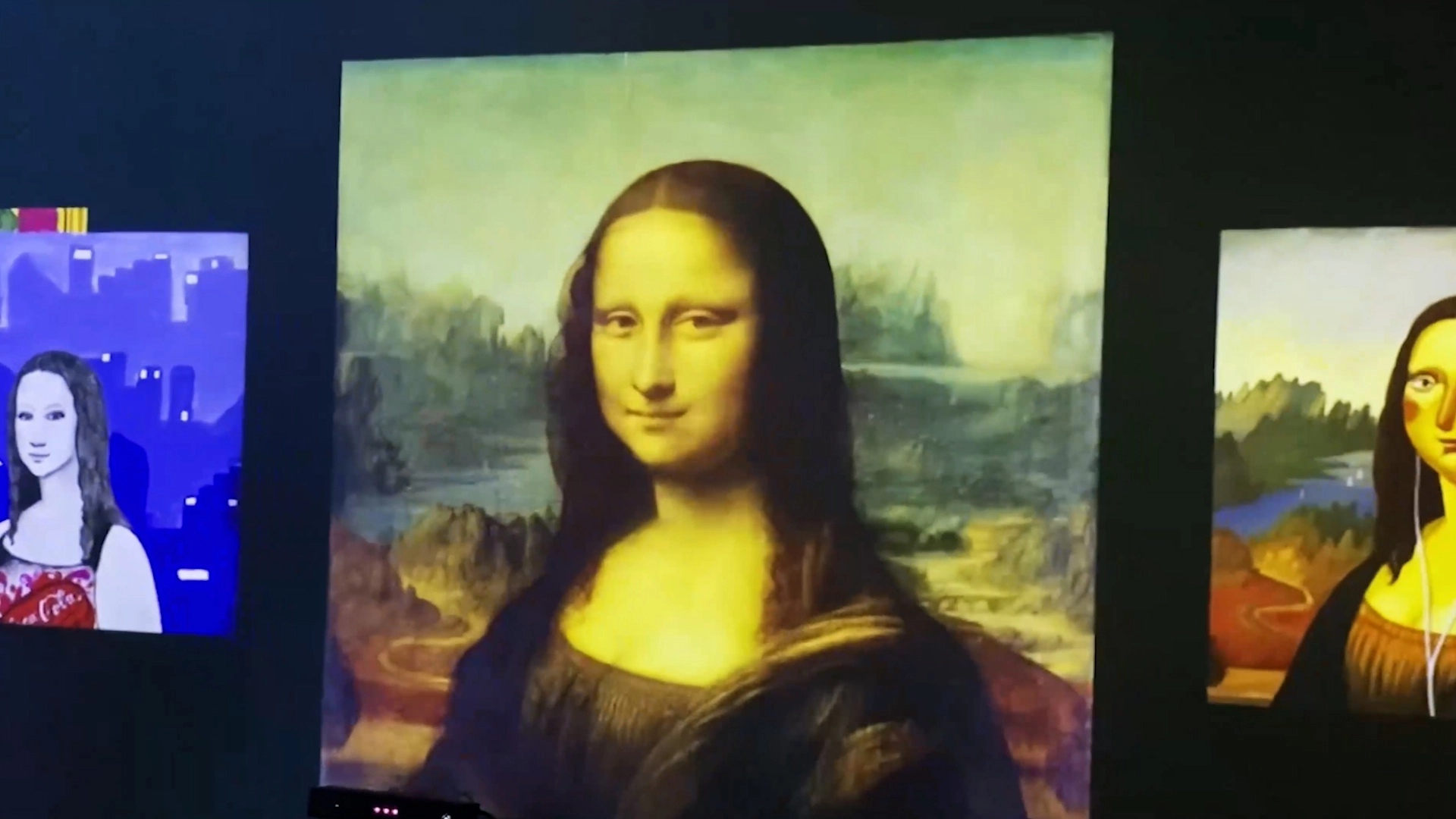
This is where the secret lies: on the path of storytelling, what matters is not the singularity or uniqueness of a story, but rather the resonance - the echo - between stories and the act of recognizing it. This is how postmodern literature was born. Why not, indeed? You read a story set in a medieval monastery and suddenly, in the monk trying to unravel the mysterious murders, you recognize a famous 19th-century detective; meanwhile, a blind librarian suddenly reminds you of the aforementioned, also blind, librarian, who - thank God - committed no murders and was a famous writer. As the author of that very book later noted, books speak to books and when the reader begins to perceive these layers within the pages, it becomes a distinct pleasure of its own.
Without wandering too far into this discussion, we can say in summary that literature, the film industry, the theatrical world, opera, and ballet - or more broadly, art as a whole - is, first and foremost, a search for new forms, because stories repeat themselves endlessly. Yet, each of these artistic disciplines has its own established boundaries that it will not cross, within which it develops new forms to retell the same stories.
Breaking the Boundaries
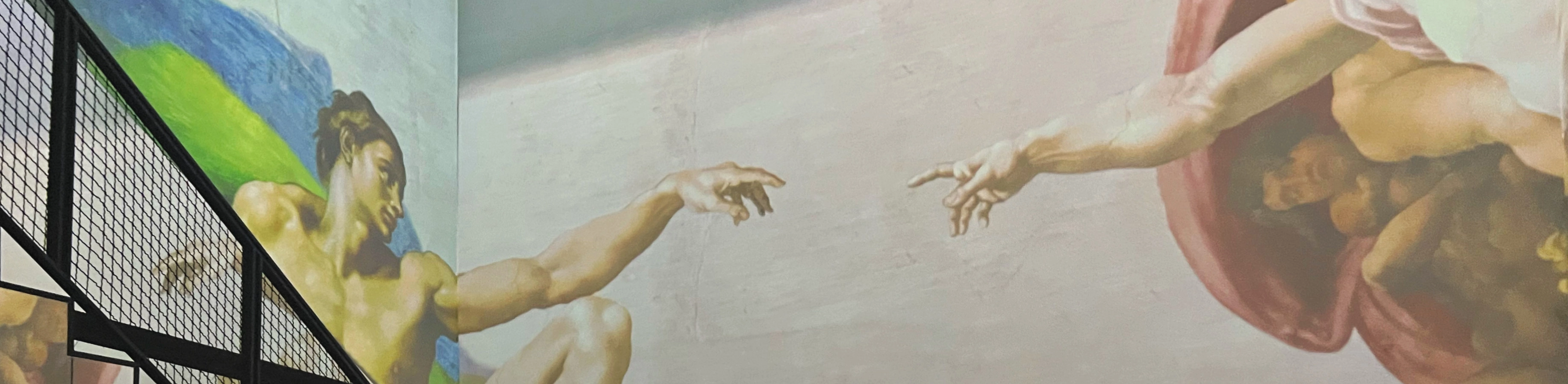
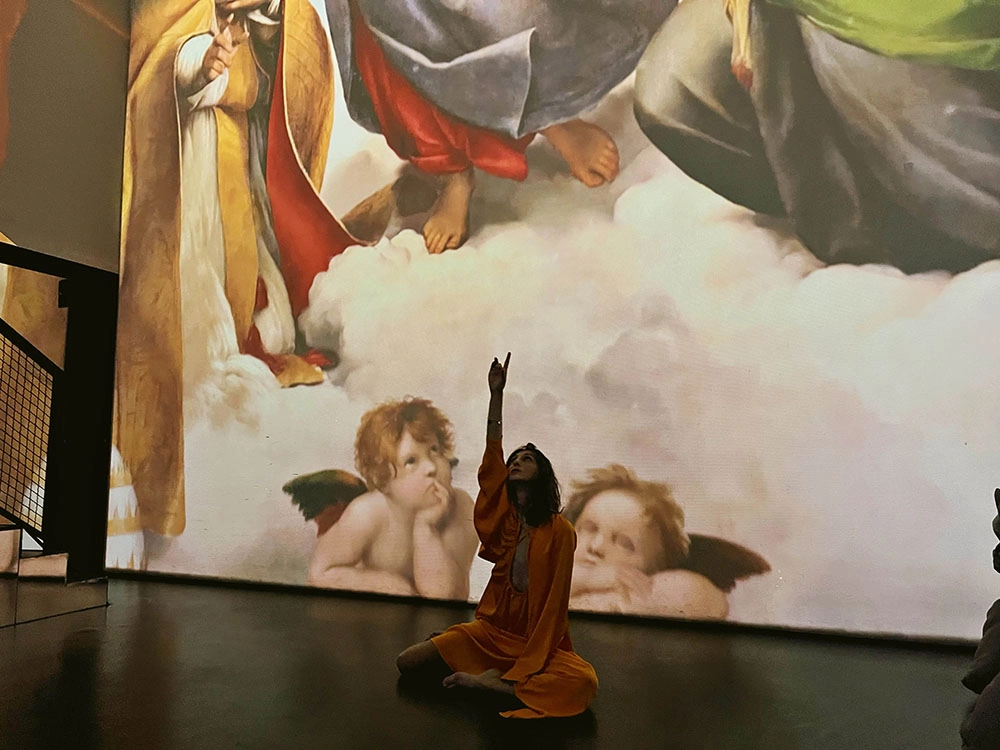
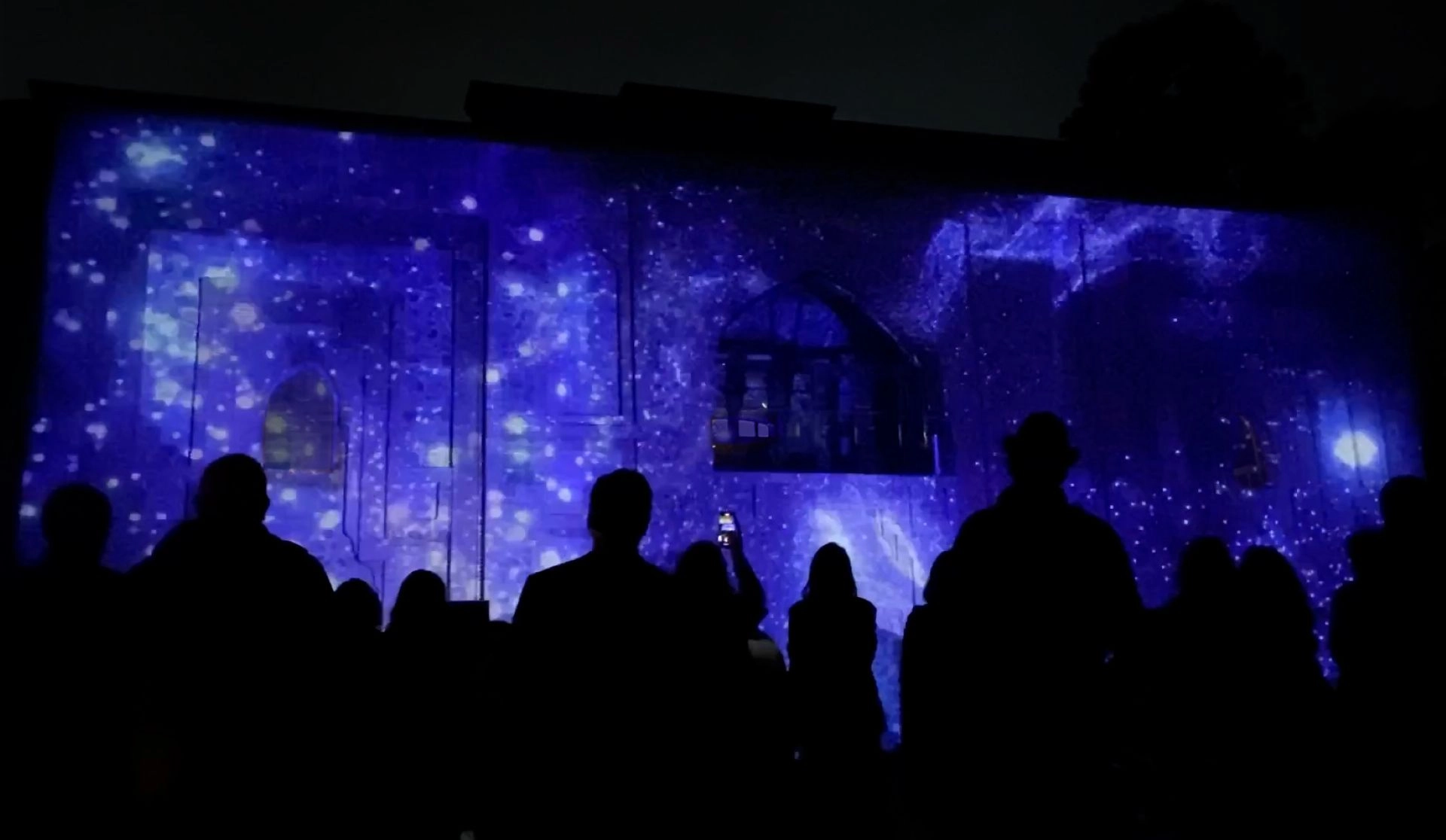
Immersive storytelling is, above all, the transgression of these boundaries and the realization of stories within a real space - or the creation of an illusion that everything is happening around you, making you a true eyewitness, an active participant, or in some cases, the main character.
Generally speaking, immersion means submersion. As a term, it denotes an event that unfolds around you, one in which you become enveloped. In turn, this immersiveness can manifest in numerous ways. In this sense, a field trip to a nature reserve or a forest park could be considered an immersive experience; however, we obviously do not use the term to describe such an event, because it lacks the second component:
storytelling
.
If we add storytelling in some form to immersiveness, we could call it
immersive storytelling
. But can we use a guided tour through a nature reserve as an example, where the guide tells us a story? Technically, yes, but this term also implies a third factor: exceptionability. Immersive storytelling entails creating or introducing this experience into a space or context where such an event does not typically occur.
Examples of Immersive Storytelling
:
-
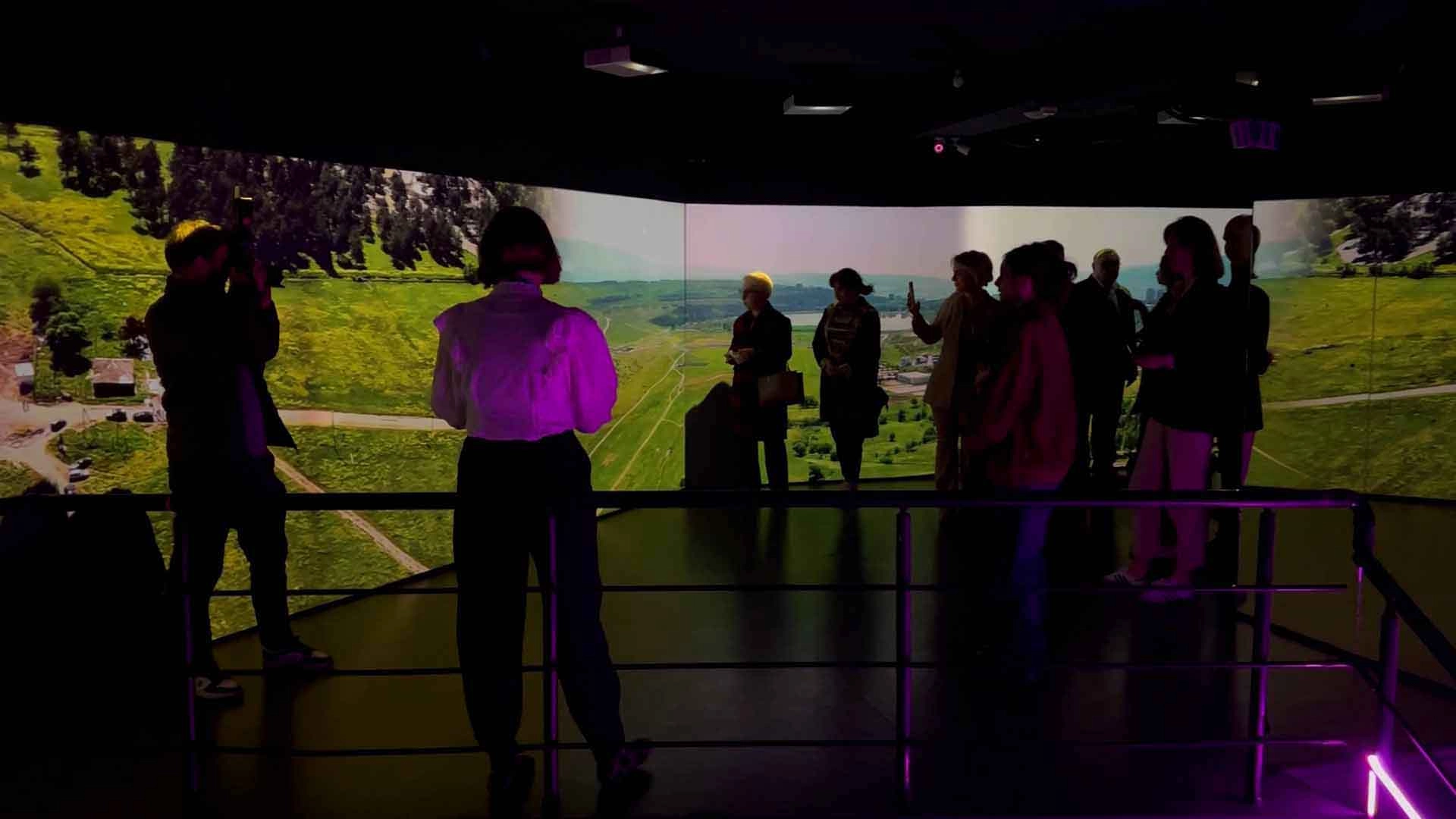
If we could create a digital room inside a shopping mall where you could walk in and get the full sensation of traveling through a nature reserve while listening to a story about nature, that would truly be immersive storytelling.
-
If, inside a real nature reserve, you encountered a special trail where a tree suddenly spoke to you, or a cave that lit up with projections upon your approach to tell you about the life of primeval humans - that, too, would be immersive storytelling.
-
Likewise, if you stood before a cliff, said "Open Sesame," and suddenly found yourself inside the world of One Thousand and One Nights - this, too, would be an example of immersive storytelling.
Three Main Components of Immersive Storytelling
Consequently, by the term immersive storytelling, we mean three core characteristics:
-
Encompassment
- The story must unfold around you, so that you are completely enveloped by it;
-
Storytelling
- It must possess a narrative structure, or the visual, auditory, and sensory perception must allow you to comprehend and understand a specific story through the experience;
-
Unusualness
- Immersive storytelling must take place in a space or context where it is unconventional and does not typically occur.
Thus, immersive storytelling is an event that unfolds in an unusual space or context, fully engulfs a person and conveys a story that can be expressed in a narrative form.
Why Did We Choose This Path?
This is all well and good, but why did we choose immersive storytelling, of all things, as the primary arena for our work? The thing is, if we look at literature, theater, cinema, other traditional forms of art and even the advertising industry, they all have rigidly defined boundaries. Immersive storytelling, however, offers you virtually the entire world as your arena,
allowing you to find as many ways to tell a story as there are stories to be told.
To put it another way, you can transform any well-known event into an entirely extraordinary adventure, utilizing modern technologies in the process to discover forms that would be practically impossible to find within traditional artistic disciplines.
Accordingly, every single project we have worked on is strikingly different from the next and never repeats itself. Because of this, each project has walked its own unique path - from the birth of the idea, through its development, to its final execution. Consequently, it is impossible to get bored while working on a project, to walk a beaten path or to replicate exactly what has already been done. At the same time, every member of our team has their own favorite tools, forms of expression and background; immersive storytelling allows us to merge all of this naturally, creating something entirely new, distinct and exceptional.
We will share more in future blogs about how immersive storytelling can be created and what practical applications it can have in our daily lives.